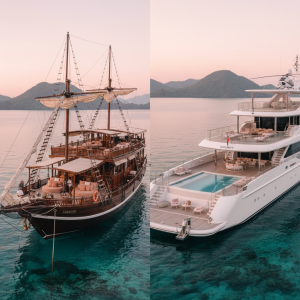
Phinisi vs Traditional Yachts: Key Differences
Phinisi and traditional yachts differ in design, cultural heritage, and sailing experience. Phinisi boats represent Indonesia’s rich maritime history, offering unique features and a distinct aesthetic, while traditional yachts typically focus on luxury amenities and modern design. Each provides a unique sailing experience.
Phinisi vs. Traditional Yachts
When comparing a phinisi to traditional yachts, the differences lie in their design, cultural roots, and the overall sailing experience they offer. Phinisi boats are steeped in Indonesian heritage, crafted with a focus on traditional techniques and sustainable materials, giving them a unique charm that is hard to replicate. The origins of the phinisi date back to the Bugis and Makassarese people of South Sulawesi, who have been building these vessels for centuries, reflecting a deep connection to the maritime world.
Phinisi Unique Features
Phinisi boats are renowned for their stunning handcrafted wooden structures, which are built using traditional Indonesian shipbuilding techniques. These vessels are typically constructed from ironwood and teak, known for their durability and resistance to harsh sea conditions. The design often includes two masts and seven sails, giving the phinisi its distinctive silhouette. Each phinisi is a labour of love, taking several months to over a year to complete, depending on the size and complexity of the design.
- Construction Materials: Phinisi are made from high-quality wood, while traditional yachts often use modern composites or metals. Ironwood, known locally as ulin, is particularly valued for its resistance to water and insects, making it an ideal choice for the hull.
- Cultural Heritage: Phinisi boats carry a rich cultural narrative, representing the maritime skills of the Bugis and Makassarese people. These communities have passed down their shipbuilding knowledge through generations, ensuring that each phinisi embodies their seafaring legacy.
- Sailing Experience: Phinisi offers a more traditional sailing experience, often preferred by those interested in nautical history. The sailing journey on a phinisi is an opportunity to experience the open sea much like the traders and explorers of the past did.
Yacht Comparison
Traditional yachts are typically synonymous with luxury and modern design, offering a wider range of amenities compared to phinisi boats. They often feature state-of-the-art technology, spacious interiors, and a focus on comfort. These yachts can include amenities such as swimming pools, gyms, and even helipads, catering to a clientele that prioritises modern luxury. Phinisi, on the other hand, provide a more intimate connection with the sea and a sense of adventure that is deeply rooted in tradition. The experience aboard a phinisi is more about appreciating the natural surroundings and the craftsmanship of the vessel itself.
For those seeking a unique maritime journey, phinisi offer an authentic sailing experience that stands in contrast to the often commercialised feel of modern yachts. For an in-depth look at the phinisi experience, you can explore our comprehensive FAQ page.
Phinisi Design and Construction
The construction of a phinisi is an art form, passed down through generations. Each vessel is a tribute to the skills and traditions of the Indonesian people. The construction process involves skilled artisans who meticulously craft each part of the boat, ensuring that it not only meets functional needs but also embodies the spirit of Indonesian maritime culture. The shipbuilding process is typically a community effort, where local craftsmen contribute their expertise in various aspects, from carving intricate designs to assembling the sails.
For a deeper appreciation of these details, visit our page on the unique features of phinisi.
2027 Note
As of 2027, the popularity of phinisi boats continues to grow, appealing to those who seek a blend of cultural history and sailing adventure. With an increasing focus on sustainable tourism, phinisi offer an eco-friendly alternative to traditional luxury yachts, aligning with global efforts to preserve natural resources while enjoying the beauty of the seas. The use of sustainable materials and the reliance on wind power for sailing make phinisi a preferred choice for environmentally conscious travellers.
FAQ
What are the main differences between a phinisi and a traditional yacht?
The main differences are in design, cultural heritage, and sailing experience. Phinisi are handcrafted with traditional techniques, embodying Indonesian culture, while traditional yachts focus on luxury and modernity. This distinction makes phinisi an attractive option for those interested in cultural exploration and historical appreciation.
Why choose a phinisi over a traditional yacht?
Choosing a phinisi offers a unique cultural experience and a connection to maritime history, ideal for those seeking adventure and sustainability. The journey aboard a phinisi is about more than just travel; it is about embracing the stories and traditions of the sea.
How are phinisi constructed?
Phinisi are handcrafted by skilled artisans using traditional Indonesian techniques, employing high-quality wood like ironwood and teak for durability. The construction involves a detailed process of selecting the right materials, shaping the wood, and assembling the vessel, ensuring that the final product is both functional and beautiful.