Phinisi vs Superyacht in Indonesia: Why the Traditional Schooner Wins
Indonesia Luxury Phinisi is a curated Indonesia luxury tourism experience offered by Indonesialuxuryphinisi Guide: handpicked routes, vetted operators, transparent pricing, and 24/7 concierge support across Indonesia.
- What makes Indonesia Luxury Phinisi a premium experience.
- How Indonesialuxuryphinisi Guide curates exclusive access and concierge logistics.
- Routes, seasons, and pricing transparency — no hidden fees.
Phinisi vs Superyacht in Indonesia: Why the Traditional Schooner Wins
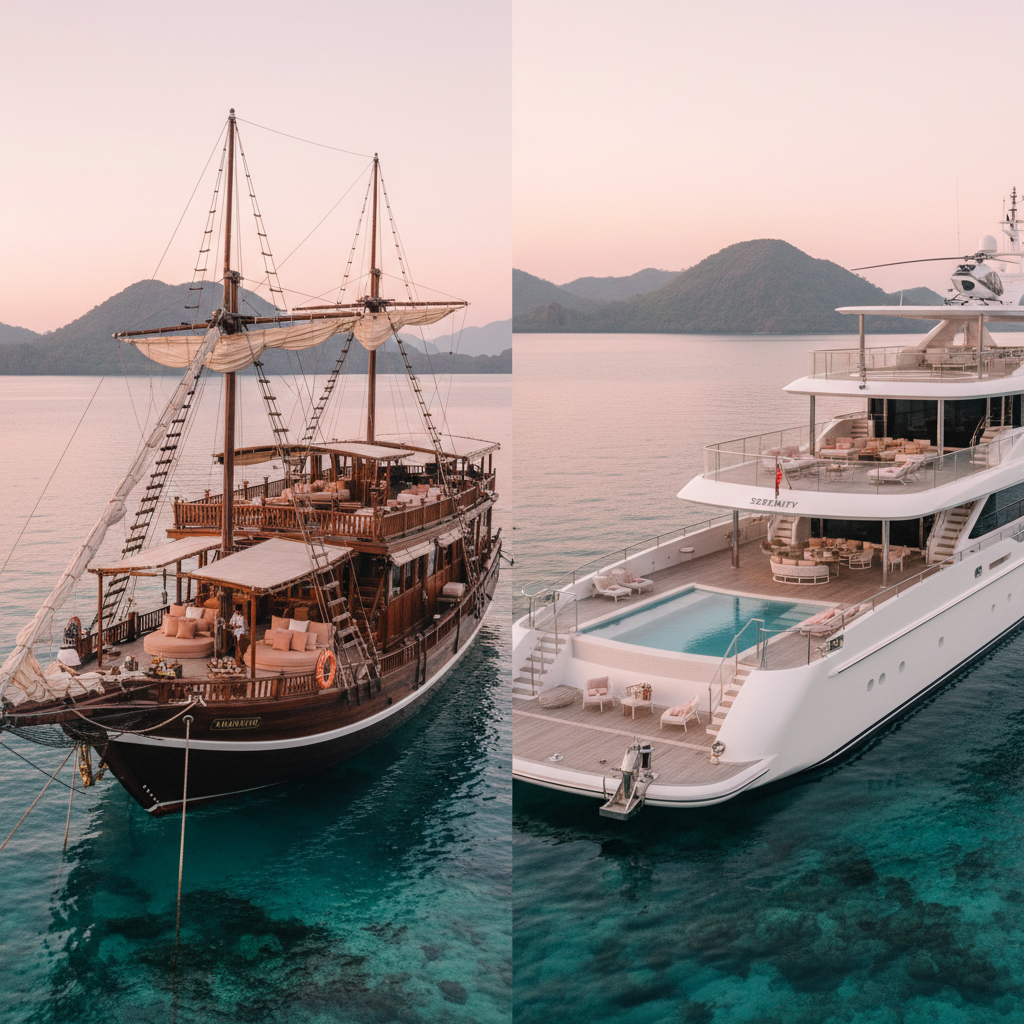
The single most common question our atelier receives from first-time charter guests is whether to charter a luxury phinisi or a steel-hull superyacht for an Indonesia voyage. Both deliver private exclusivity, both can sail Komodo and Raja Ampat, both offer full crew and gourmet kitchens. The honest answer, after fifteen years of brokering both formats, is that for Indonesia specifically the phinisi wins on cost, draft, range, authenticity, and crew network, while the superyacht wins on stabilised cabin sleep and helicopter pad. Here is the unvarnished comparison.
Definition: What Is a Phinisi vs What Is a Superyacht?
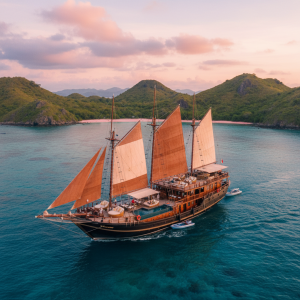
A luxury phinisi is a wooden traditional Indonesian sailing schooner, 28-55 metres LOA, two-masted with seven sails, hand-built by Bugis shipwrights in South Sulawesi. The hull is ironwood and teak, the rig is canvas, the silhouette is unchanged from the 14th-century original. A superyacht in the Indonesia context typically refers to motor yachts above 30 metres with steel or aluminium hull, twin diesel propulsion, dynamic stabilisers, and zero or token sail. Examples that visit Indonesia include charter favourites like Christensen, Benetti, Heesen, and Feadship-class vessels.
Cost Comparison
Indicative weekly all-inclusive charter pricing for the same 7-night Komodo voyage:
- Premium luxury phinisi (7 cabins, 14 guests): USD 38,000-55,000.
- Ultra-luxury phinisi flagship (10 cabins, 18 guests): USD 70,000-95,000.
- 30-35 metre Western superyacht (5-6 cabins, 10-12 guests): USD 90,000-140,000.
- 50+ metre Western superyacht (6-8 cabins, 12-16 guests): USD 250,000-650,000.
The phinisi delivers similar cabin count and guest capacity at roughly 30-50% of a comparable superyacht’s weekly rate. The cost differential reflects three factors. First, fuel, a phinisi sails for portions of every leg, a superyacht runs both diesels constantly. Second, crew salaries, an Indonesian phinisi crew is paid in IDR and locally trained, while a Western superyacht crew commands MCA-certified European salaries. Third, registry, Indonesian-flag vessels pay no foreign import duties or temporary cruising permits, while Western-flag superyachts pay the CAIT (Cruising Permit) fee plus 11% PPN charter tax. The phinisi cost advantage compounds on a 10-night voyage by USD 50,000-200,000.
Draft & Anchorage Access
This is where the phinisi quietly dominates Indonesia voyages. Phinisi draft is typically 2.0-2.5 metres for 35 m vessels, 2.5-3.0 metres for 45 m. Western superyachts of 35-50 m carry 3.5-5.5 metre drafts. In Indonesia, this matters more than anywhere on earth. The shallow lagoons of Wayag, the protected anchorages of Misool, the inner reefs of Pink Beach, and the mooring buoys of Kanawa, all are accessible to phinisi. Most are inaccessible to a 4 m-draft superyacht, which must anchor offshore and tender 20-40 minutes through chop. Overnight at Wayag is impossible for most superyachts and routine for phinisi.
Range & Itinerary Flexibility
Phinisi range under combined sail and engine is 3,000-4,500 nautical miles, sufficient for the entire archipelago without refuelling. Most luxury phinisi can sail Komodo to Raja Ampat in a 14-night voyage. Western superyachts have 1,500-3,000 nm motor range and require diesel resupply at Bali, Lombok, or Bitung. Phinisi can also lighten the engine load for 30-50% of legs by setting sail, dropping fuel cost and acoustic profile to near zero. Wind-only sailing is possible for short legs in Komodo’s funnel current.
Authenticity & Cultural Layer
This is the qualitative dimension where phinisi simply has no superyacht equal. The phinisi has sailed eastern Indonesia for 600 years, its silhouette is unchanged, its crew are descendants of the Bugis seafaring nobility, and the hull was hand-shaped by panrita lopi shipwrights in the boatyards of Bira. To approach Komodo at dawn under sail, with seven canvas sheets aloft, is to feel the same swell that rocked spice traders and Sultanate ambassadors. A glass-and-steel motor yacht delivers you to the same anchorage but skips the soul of the journey. UNESCO inscribed phinisi shipbuilding on its Intangible Cultural Heritage list in 2017, no superyacht builder enjoys the same recognition.
Stabilisation & Cabin Comfort
This is where the superyacht edges the phinisi. Modern superyachts ship with active fin stabilisers and gyroscopic systems (Seakeeper, Quantum Zero Speed) that reduce roll at anchor by 80-90%. Phinisi typically use bilge keels and beam-on anchoring strategies but cannot match a Seakeeper. In genuinely calm anchorages (the lee of Padar, Wayag’s interior lagoon, Horseshoe Bay) the difference is imperceptible. In exposed crossings (the Banda Sea in shoulder months, the Lombok Strait in monsoon swell) a stabilised superyacht delivers measurably better sleep. Most charter guests do not encounter conditions that expose the difference, but it is honest to mention.
Helicopter & Toy Capacity
Western superyachts above 50 m commonly ship with helideck or touch-and-go pad, certified for AS350 or H125 helicopters. Many Asia-Pacific charterers value the ability to fly Bali-to-Komodo in 90 minutes via heli rather than commercial connection. Most phinisi do not offer helideck, though our Ultra-Luxury tier flagship phinisi (45-55 m) does carry helipad-rated upper-deck space and can host touch-and-go. Toy garages on superyachts can house jet skis, sea bobs, submersibles, and water-ski rigs. Phinisi typically carry kayaks, paddleboards, snorkel gear, and twin tenders, sufficient for 95% of Indonesian water sports.
Crew Hospitality Style
Indonesian phinisi crew are warmer and less formal than European-trained superyacht crew. Phinisi stewards remember your name on day one, joke with the children, sing on the upper deck at sunset, and adapt to your rhythms. Superyacht crew are MCA-certified, English-fluent, white-glove formal, and uniform across global itineraries. Both styles have their loyalists. We tend to find that families and Asian charterers prefer the warmer phinisi style, while European royalty and corporate clients sometimes prefer the formal superyacht service. We can flex either way.
Environmental Profile
Phinisi sail-assisted operation produces 40-60% less carbon per nautical mile than equivalent motor yachts. Wooden hull replacement is renewable timber-cycle, while steel-hull yachts carry permanent embodied carbon. On the other hand, older phinisi may not have advanced grey-water treatment, while modern superyachts ship with MARPOL-certified bilge separators and IMO Tier III emission compliance. Our partner phinisi all carry grey-water tanks and dispose only at certified ports, but the superyacht industry has tighter audit trails. Net, both formats can be operated responsibly, our atelier vets each individually.
Verdict by Use-Case
- Family with children, first Indonesia voyage: phinisi (cultural depth, draft access, warmth).
- Couples honeymoon, photography priority: phinisi (Pink Beach, Padar, Wayag access).
- Diving charter, 12-night Raja Ampat: phinisi (range, dive deck, anchorage).
- Corporate retreat, 8 executives, helicopter required: Ultra-Luxury phinisi (helipad-capable) or superyacht.
- Wedding party, 18 guests, formal hospitality: Ultra-Luxury phinisi (10 cabins) or 50 m superyacht.
- Banda Sea crossing in shoulder season, sleep priority: stabilised superyacht.
- Multi-archipelago 21-night exploration: phinisi (range, sail-assist economics).
Hybrid Option: Modern-Hull Phinisi
A new generation of fibreglass-reinforced phinisi (built since 2018) ships with FRP-on-ironwood hull, twin caterpillar diesels, partial active stabilisation, and helideck. These vessels split the difference, you keep the phinisi silhouette and Sulawesi heritage but inherit motor yacht stability. Our atelier’s flagship Ultra-Luxury tier is largely modern-hull. Expect USD 75,000-110,000 weekly. We position these as the most flexible single category in the Indonesian charter market.
Heritage Footnote
The Bugis maritime tradition predates European naval architecture by half a millennium. The phinisi rig, with its asymmetric mast spacing and seven-sail plan, has been refined for monsoon-cycle Indonesian waters since the Majapahit era. Western superyacht hull forms are evolutions of British and Dutch yacht architecture optimised for North Atlantic conditions. When you charter in Indonesia specifically, the phinisi is hull-tuned to the waters you are sailing. That alone is a quiet engineering argument that few brokers articulate.
Compare Costs Side By Side
The full vessel tier table for our luxury phinisi sits on the Indonesia luxury phinisi page. For Komodo voyages see Komodo private charter luxury phinisi. For diving connoisseurs the natural progression is Raja Ampat luxury phinisi liveaboard.
Begin the Conversation
Whether you choose phinisi, superyacht, or hybrid, our atelier curates the right vessel for your dates, party, and travel rhythm. Reach us for a 30-minute discovery call.
Email: [email protected]
WhatsApp: +62 811-3823-875
Request a Phinisi vs Superyacht Comparison