Are Private Phinisi Charters in Indonesia Safe for Families?
- Vessels are often built to international classification standards with modern navigation and safety equipment.
- Crews possess certified maritime, first-aid, and emergency response training.
- Itineraries and activities are customized to the age, ability, and comfort level of every family member.
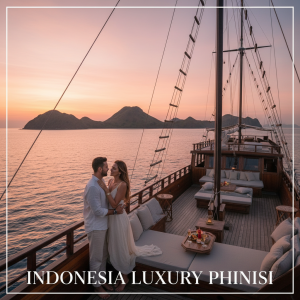
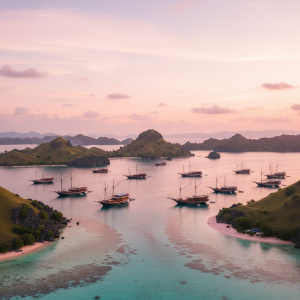
The warm, teak deck is alive under your bare feet. A gentle breeze, carrying the scent of clove and saltwater, rustles the vast canvas sails overhead. Your children are at the bow, their laughter echoing across the turquoise bay as a pod of dolphins arcs through the vessel’s wake. You are anchored in a secluded corner of the Komodo archipelago, a world away from everything. It is a scene of profound tranquility and adventure. Yet, for any parent, a practical question underpins this perfect moment: In an archipelago of 17,508 islands, is an expedition like this truly, fundamentally safe for my family?
Beyond the Ancient Blueprint: The Engineering of a Modern Phinisi
The very image of a Phinisi—a two-masted Indonesian sailing ship—evokes a sense of ancient maritime heritage. This legacy is so significant that the art of boatbuilding in South Sulawesi was inscribed on the UNESCO list of Intangible Cultural Heritage. However, it’s crucial for discerning travelers to understand that the luxury vessels available for private charter today are a world apart from their historical cargo-carrying ancestors. While they retain the majestic silhouette and soul of the traditional design, their construction is a masterclass in modern naval architecture and safety engineering. The best operators in the indonesia luxury phinisi space commission vessels built not just for aesthetics, but for resilience.
These are not hastily constructed wooden boats. The process, often taking 18 to 24 months and costing upwards of $3 million, involves laying a hull of ironwood (kayu ulin), renowned for its density and resistance to the marine environment, or increasingly, of marine-grade steel. I once spent a week in the boatyards of Bira, watching craftsmen shape these immense hulls with a blend of generational knowledge and modern precision. Naval architects are involved from day one, ensuring the vessel’s stability, buoyancy, and structural integrity meet rigorous international standards. They are equipped with powerful marine engines—the sails are often for stability and silent, emission-free cruising—bow thrusters for maneuverability, and sound-proofed engine rooms. When you ask, “is a private phinisi charters indonesia safe?” the answer begins with the very keel of the ship, a foundation of modern engineering hidden beneath its romantic, traditional facade.
The Unseen Shield: International Safety Standards and Onboard Equipment
A vessel’s true commitment to safety is revealed not in its plush cabins, but in its bilge pumps, its fire suppression systems, and its navigation bridge. While not all Indonesian-flagged vessels under 500 gross tons are legally required to follow full SOLAS (Safety of Life at Sea) conventions, the elite tier of charter phinisis voluntarily adopts these principles as their operational bible. This commitment translates into a comprehensive suite of safety and communication equipment that provides a powerful, unseen shield around your family throughout the voyage.
On the bridge, you will find not just a wooden ship’s wheel, but dual GPS systems, state-of-the-art radar, depth sounders, and long-range radios. For over-the-horizon communication, every top-tier vessel is equipped with a satellite phone and an EPIRB (Emergency Position Indicating Radio Beacon), a device that can transmit a distress signal from anywhere on earth. For personal safety, you will find SOLAS-approved life rafts with a capacity far exceeding the number of guests (often 150% or more), and a full complement of personal flotation devices (PFDs) in all sizes, from adult to infant. During a tour of the 65-meter Phinisi Lamima, the cruise director pointed out the automated fire dampers and the CO2 fire suppression system protecting the engine room—systems that are entirely invisible to guests but absolutely critical to their wellbeing. This level of preparedness is the industry standard for any operator a family should consider.
The Human Element: Why Your Crew is Your Greatest Safety Asset
The most advanced technology is only as effective as the people operating it. On a luxury phinisi, the crew is the living, breathing heart of the safety operation. These are not seasonal workers; they are career maritime professionals, and their expertise is arguably the single most important factor in ensuring a safe family charter. A typical crew of 15 to 20 on a 12-guest phinisi means an extraordinary crew-to-guest ratio, often better than 1:1, ensuring constant vigilance and personal attention. The captain will hold a high-level master mariner certification and possess thousands of hours of experience navigating the specific waters of your itinerary, be it the strong currents of the Komodo National Park or the intricate reef systems of Raja Ampat.
Beyond the bridge, the entire crew is trained in safety protocols. I spoke with Captain Iwan, a veteran of the Banda Sea, who explained that his crew conducts weekly fire and man-overboard drills. Key crew members will have advanced first-aid and CPR certifications, often Emergency First Response (EFR), and the dive guides are PADI-certified Divemasters or Instructors who are also trained in oxygen administration. This expertise extends to their interaction with families. They know which coves are sheltered for a toddler’s first dip in the sea, how to properly fit a child’s snorkeling mask, and how to make safety briefings engaging rather than alarming for younger guests. Their deep, local knowledge of weather patterns and sea conditions, something no chart can fully capture, allows them to make proactive decisions that keep the vessel in safe and comfortable waters at all times.
Crafting a Family-Centric Itinerary: Safety Through Planning
The concept of safety on a private charter extends far beyond the vessel itself; it is woven into the very fabric of the itinerary. This is where the value of a bespoke travel atelier truly shines. A reputable operator understands that a successful family journey is not a one-size-fits-all product. The process begins with a detailed consultation about your family’s composition: the ages of your children, their swimming abilities, any dietary restrictions or allergies, and your collective appetite for adventure. This information is not for pleasantries; it is critical for crafting a voyage that is both exhilarating and secure.
For a family with young children, an itinerary might prioritize the calm, protected bays within the Komodo National Park, focusing on gentle beach landings and snorkeling in shallow, current-free “aquariums.” For a multi-generational group with teenagers and grandparents, the plan might balance active pursuits like trekking and paddleboarding with more leisurely activities and comfortable, stable anchorages. The cruise director has the authority and local knowledge to adapt the plan in real-time. If a channel known for manta rays is experiencing unusually strong currents, they will divert to a different, safer site. This flexibility, a core tenet of any well-run indonesia luxury phinisi charter, ensures that the adventure never compromises the wellbeing of the guests. A typical 7-day charter might cover 80 nautical miles, but the true measure of its success is the quality and safety of the experiences within that distance.
Health, Hygiene, and Medical Preparedness at Sea
For any parent traveling to a remote destination, questions of health and hygiene are paramount. The leading phinisi charters address these concerns with systems and protocols that rival a luxury hotel. Onboard, you will find professional galley kitchens staffed by experienced chefs who are meticulous about food safety and sourcing. They can cater to any dietary need, from severe nut allergies to gluten-free requirements or simply a child’s preference for plain pasta. You are not at the mercy of local infrastructure.
Potable water is produced onboard by industrial-grade reverse osmosis watermakers, often capable of generating over 5,000 liters of purified water per day, which is then typically filtered again before reaching the tap. This eliminates any risk associated with consuming local water. From a medical standpoint, these vessels are exceptionally well-prepared. They carry comprehensive, physician-designed medical kits that go far beyond basic first aid, including oxygen tanks, defibrillators, and a range of prescription medications. Furthermore, the best operators have standing agreements with 24/7 shore-based medical support services like an SOS International. Via satellite phone, the crew can be in immediate contact with an emergency room doctor for consultation. They also have well-rehearsed medical evacuation plans to the nearest reputable facility, such as the Siloam Hospital in Labuan Bajo, ensuring that in the unlikely event of a serious issue, a clear and efficient procedure is already in place.
Quick FAQ: Answering Your Pressing Questions
What about seasickness, especially with children?
Modern phinisi designs, with their deep hulls and substantial weight (often over 500 tons), are inherently more stable than smaller boats. Many of the newer, top-tier vessels are also fitted with fin stabilizers that dramatically reduce roll. Critically, itineraries are planned to maximize time in calm, leeward waters and minimize open-sea crossings, which are typically done overnight when guests are asleep.
Are there age restrictions for children on a private phinisi charter?
Generally, no. On a private charter, the entire vessel is yours, and reputable operators welcome children of all ages, from infants to teenagers. The key is communication. The experience will be tailored to your family’s needs, with amenities like cribs, high chairs, and even temporary safety netting on railings available upon request. Activities are then designed to be age-appropriate and safe for everyone.
How do we handle communication with the outside world in an emergency?
Every vessel is equipped with a satellite phone for voice calls, providing reliable communication from anywhere. Most also offer satellite Wi-Fi. While it may not be fast enough for streaming movies, it is more than adequate for emails, messaging apps, and checking in with family or work. This ensures you are never truly out of touch.
What is the safety protocol for water activities like kayaking or snorkeling?
Safety is paramount. All water activities are supervised by experienced guides. A dedicated tender boat, or “chase boat,” is always on standby to provide support, pick up tired snorkelers, or respond instantly to any issue. Guides are in the water with you, pointing out marine life and keeping a watchful eye. PFDs are mandatory for activities like kayaking and paddleboarding, and are always available for any guest who is not a confident swimmer.
Ultimately, the question is not whether a phinisi charter in Indonesia can be safe for a family, but how to ensure that it is. The safety of your journey is not a feature; it is the fundamental platform upon which an unforgettable experience is built. It resides in the steel of the hull, the training of the crew, the foresight of the itinerary planning, and the unwavering commitment of the operator to your family’s wellbeing. When you choose the right partner, you are not just booking a holiday; you are investing in peace of mind, allowing you to fully immerse yourself in the magic of the archipelago, confident that every detail has been managed with uncompromising care. To explore the fleet of meticulously vetted vessels and consult with experts who prioritize your family’s security above all else, begin your journey with the Indonesia Luxury Phinisi Atelier.